info@discoverthelakes.co.uk
Tel: 07950 033272
HomeNewsNewsletter
Print-friendly version

Wrostlers Barn

Wrostlers Barn
Address: Wrostlers Barn
Nibthwaite Grange Farm
Near Ulverston
Cumbria
Postcode: LA12 8DB
Email: click here to make an enquiry
Telephone: 01229 885663
Description
A basic, secluded, lake district bothy on the east side of Coniston Water. Sleeps up to 14 people at a cost from £150 per week for the building use, not per person. I walked past it today - looks a great place to stay.

A few faq's - Yes it can sleep 14 people provided you're all friends ! Probably 10-12 people would work better. No, you can't drive right up to the bothy but it's only a 2 minute walk from the car park. Yes, it's very close to the lake.
Also it is available for weekends and not just full weeks.

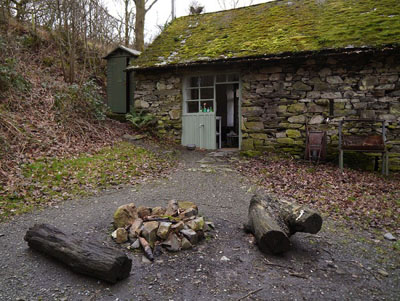
For really serious outdoor experience, Wrostlers Barn offers extremely basic accommodation in the most spectacular secluded location just metres from the eastern shore of Coniston Water and all it offers.

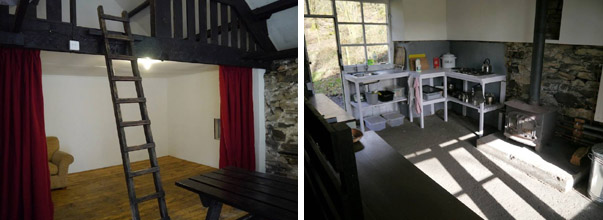
The stone bothy was converted from an isolated field barn and has recently been given an extensive refit including some insulation for the building. Cooking facilities and a wood-burning stove have been added to make the barn suitable for families as well as outdoor enthusiasts. The barn stands within the fringe of the nationally important Dodgson Wood SSSi (site of special scientific interest) and for this reason no wood can be collected on the site. It is being run on a sustainable format with the use of locally coppiced wood, composting toilets and a strict recycling policy. At the barn information about the wood and other conservation work by the National Trust is available.


Nearby
The barn offers storage for canoes, bikes and other equipment as there are extensive opportunities to partake in these activities with Coniston Water and Grizedale Forest on the doorstep. There are also countless stunning walks within striking distance including Coniston Old Man and the High Furness Fells.

For a touch of culture, Brantwood the former home of John Ruskin and its attractive gardens and café is within walking distance, Tarn Hows and Hill Top are no more than a few miles drive away. The steamboat Gondola that plies the lake from April till November can be boarded from the nearby pier by prior arrangement and will transport you to Coniston and back in total silence.

What to Bring
The bothy is effectively a five star stone tent and therefore you are advised to bring sleeping bags plus mats to ensure you have a comfortable night during your stay. Towels, loo rolls, washing up, and tea towels, the other essential is Drinking Water and the odd bottle of something nice may make the evenings even more pleasurable.

Facilities
• Normal sized five-ring gas hob with a good selection of catering equipment.
• Two large gas lanterns provide basic lighting but an extra lantern or torch is advisable.
• Gas is provided
• Preparation table and two picnic benches, which can be taken outside in good weather.
• Wood Burning Stove with initial wood supply (more can be purchased)
• Cold water tap plus hot water when the wood-burner is lit.
• Cutlery and Crockery for 12 people.
• Composting Toilets with simple instructions.
• Raised sleeping platform.
• Parking space for up to three cars with-in close proximity.
• Steel barbecue
• Small campfires within fire site by agreement (wood supply provided)


Further Information
• Occupants prior to departure must clean the Bothy.
• Arrivals are from early afternoon onwards, departures during the morning.
• Keys should be collected/deposited at Nibthwaite Grange Farm.
• Dogs are allowed, but owners are asked to keep them under close control.
• Extra camping can be made available on the adjacent
campsite
• Gondola can be booked by calling 015394 41288
• Any non-recyclable rubbish should be taken away with you and the bothy left as you found it.

Rates / Booking Information - per week / short break 3 days

November – March
(excluding Christmas and new Year) £150 / £100 + £20 per extra night

April, May and October £180 / £120 + £20 per extra night

June – September
Plus Christmas and New Year £200 / £130 + £20 per extra night

All charges VAT inclusive and a £40 deposit is required with every booking  

Inventory for Wrostlers Barn:

Cutlery:
12 forks,
12 knives,
12 spoons,
12 teaspoons,
1 bread knife
and 1 sharp knife

Utensils:
1 peeler,
1 ladle,
1 can opener,
1 large mixing bowl,
1 medium mixing bowls,
1 slot turner,
1 perforated spoon,
1 colander,
1 measuring jug
1 chopping board,

Cooking equipment:
1 large pan with handle.
1 2lt pan
1 3lt pan,
1 5lt pan,
1 8lt pan,
1 extra large frying pan,
1 large frying pan,
1 large kettle,
1 medium teapot,


Crockery:
12 plastic tumblers,
6 large mugs,
6 medium mugs,
12 large plates,
12 small plates,
12 bowls,
2 large jugs,

Cleaning equipment:
1 dustpan & brush
1 broom

As an alternative/possible overflow, there is a group campsite nearby click the link for full deatails of Dodgson Wood Group Campsite

About Your Hosts:

Name of Farmer (s)

John & Maxine Atkinson

Summary of the farming operation and where the farm is located
The Farm is run by John and Maxine with the help of the rest of the family and local contractors. The land extends in several blocks along the east side of Coniston Water from Lowick Bridge to Brantwood in a strip bordered by the lake and river Crake to the west and woodland to the east.

History of the farm
The Atkinson Family have farmed Nibthwaite Grange for six generations and have lived in the surrounding area since records began. The original house was built by the monks of Furness Abbey and was also once a Ale House as it stood on the then main route to Hawkshead and there are still hopps growing in the garden. As well as the home farm we rent further land in the surrounding area mostly off the National Trust which includes the land at Park-a-Moor which also has links with Furness Abbey being a sheep park or “Herdwyck” in the fourteenth centaury

Number of individuals/family members who work on the farm
Both myself and my Wife work off the farm to supplement our income. My father helps out two days a week and my eldest son Tom helps at weekends and evenings. We also use local contractors for tractor work such as silaging and muck spreading


The Size of the Farm

The farm is 140ha of which 100ha is rough grazing we also have common rights for 188 sheep on Bethecar Moor

Type of Farm

Terrain
The farm is made up of around 50 acres of valley bottom land at Nibthwaite which nestles in between the river Crake and the ancient oak woodland which covers the valley sides, 100 acres of lake shore land and wood pasture and 150 acres of intake and rough grazing.

Livestock operation -  Numbers, marketing etc


The farm is managed on a low input basis using mostly traditional breeds all the sheep are sold finished but most of the cattle are sold store to specialist in the  sale of traditional breed cattle.
30 Suckler Cows mostly Blue Greys and Galloways with calves kept as replacements or sold store at around two years of age
300 Fell sheep 250 Cheviots 50 Herdwicks bred pure
70 Gimmer Hoggs
100 Older ewes crossed and kept on the lower land
A few rare breed pigs
Prizes & Awards
We have won a lot of praise for our conservation work but no actual prizes or awards as yet. I am currently treasurer for the Cumbria Federation Of Commoners and it is something I strongly believe in as an aide to get a better voice in government as they have little understanding of pastoral communing.


Grazing & Conservation
The whole farm is run extensively with only light use of artificial fertaliser on the lower land. The farm and the moor are in the ESA scheme and we also use our cattle for conservation work in the surrounding woodlands for Natural England and the National Trust. The land also borders the nationally important Dodgson Wood SSSI and has several rare species of fauna and flora which we are helping to protect.

Images/Pics of Livestock


Environmental Features

Brief Description

The farm is made up of several blocks of land running up the east side of Coniston Water. The highest point is just short of 300m and the lowest in the valley bottom is 35m. There is a mixture of small fields and medows next to the river and lake, wood pasture on the lower slopes and upland heath on the intake and fell.

Geology

Most of the land lies on Coniston slate and Park-a-Moor lies on the Ashgill Formation which is a fault formed out of mud lain down in deep water and runs through Tarn Howes and Tover

Soil Type(s)


The land is very acid with alluvial soils on gravel in the valley and peat and  thin mineral soil with rock out crops on the intake and fell

Flora


The farm has several nationally important species including some of the most northern examples of Small leaved Lime, several stands of Juniper, Atlantic Oak Woodland and Touch-me-not-Balsam the food plant of the red data species Netted Carpet Moth

Fauna


The farm is home to Barn and Tawny Owls, Buzzards, Kestrals, Sparrowhawks and Peregrine Falcons. In the lowlands patridge havwe been spotted recently the yellowhammers and gold finches  have increased in numbers, in the woods we have green and spotted woodpeckers, jays, treekreepers, red squirrels and pine martins we have sand pipers on the lakeshore which are sadly reducing to an increased feral geese problem. On the uplands there are Wheatears, Meadow Pipits, Curlew, Snipe and Woodcock, weasels, roe and red deer.

Archaeology


The name Nibthwaite is of Norse origin and means small clearing and originally the lake was called Thurston Water after a local Viking leader. Both the original old farmhouse at nibthwaite grange and the original walls at park-a-moor were built as part of the land holdings of the monks based at furness abbey in the thirteenth centaury. The land was emparked in 1339 to form a Herdwyck or sheep pasture from which the sheep got their name. The area was also heavily used for smelting ore from the Coniston fells from as early as the bronze age using charcoal made in the woods and several very early bloomerys and charcoal pitsteads can be found in the fields. This practice flourished right through the middle ages and was at its height in the eighteenth centuary

Hedgerows


The land at Nibthwaite has many meters of hedges and are of a diverse species being originally formed from the woodland edge as the fields were cleared. These are laid on a rotation every 7 to 12 years to form a stronger hedge and provide firewood for the farm.

Dry Stone Walls


The farm also has several km of stone walls which are all in good order with over 500m rebuilt in the last few years with help from the ESA scheme


Vernacular Buildings


The old farm houses at Nibthwaite and Park-a-Moor are very old and have had several additions over the centuries but both include inglenook fires with smoking hooks in the chimeney, spice cuboards and cast iron fre grates. There is also a ruined farm at High Park-a-Moor a field barn with Wrostlers style slate ridge, a peat house and we now live in a converted Georgian barn.


This farm confers a warm welcome to visitors and asks them to keep to the marked footpaths, keep dogs on the lead, and close all gates behind them)


Hospitality

B&B?

Tea Room?
Self-Catering?

This is a traditional Lakeland upland farm with lots going on all year round. Being on the east side of Coniston Lake we speak to a lot of visitors about the farm and the livestock. We have a converted field barn, bunkhouse which is let out to groups and families plus a small group campsite.
Wrostlers Barn offers extremely basic accommodation in the most spectacular secluded location just meters from the eastern shore of Coniston Water and all it offers.The stone bothy was converted from an isolated field barn and has recently been given an extensive refit including some insulation for the building. Cooking facilities and a wood-burning stove have been added to make the barn suitable for families as well as outdoor enthusiasts. The campsite stands within the fringe of the nationally important Dodgson Wood SSSi (site of special scientific interest) and is a basic woodland glade with composting toilets, cold running water and campfire.


Recreational Facilities

Farm Walks?

Pony Trekking?
Wildlife observation?
‘Meet the sheep-dogs’?

There is a major bridleway across our land at Park-a-Moor which is very popular with Mountain Bikers and Horse Riders as it offers splendid views of the lake and surrounding area. The lake is very popular for all water sports but especially sailing and canoeing. We also have fishing on the lake and the river Crake with Pike and Trout being the most popular catches.
The farm house at Park-a-Moor is leased to Grizedale Arts and is rented out to painters, poets or anyone else who wants to get away from it all and be creative. In the past it has also featured in two films including the one shown at Reghead. (as am am I and some of the family)

Special Events

Open Farm Days?


Because of our work in protecting the Netted Carpet Moth and its host species the Touch-me-not-Balsam we have hosted open days for Natural England and the National Trust to look at what we have been able to achieve and the other cattle based conservation grazing on the farm.

Footpaths

We have a lot of access land around the farm and border several very popular green roads, bridleways and footpaths.


Access

All the intake at Park-a-Moor is now open access as is the Moor and a major reinstatement project was completed on the bridleway across the intake into Grizedale Forest was undertaken seven years ago which has been very popular and well used


Images/Pics of Livestock